Water Extraction and Standing Water Removal in Texas
Pumping out standing water and pulling moisture from carpet, pad and floors.
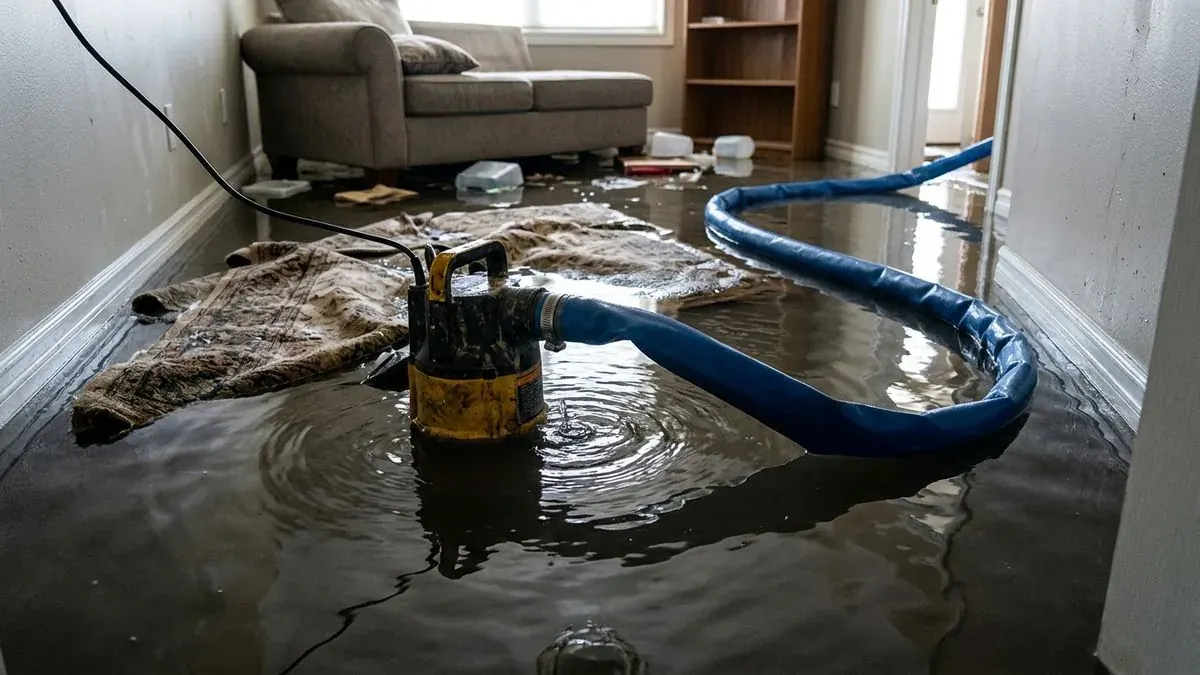
Illustration of a typical loss, not a photo of a real job.
Water Extraction: What You Need to Know
Standing water is the easy part to see. The harder part is the water that wicks into carpet pad, subfloor, baseboards and the bottom of drywall. Truck mounted and portable extractors pull water out of carpet and pad, and pumps handle deeper water in basements, garages and crawl spaces.
Crews also decide what stays and what goes. Carpet can often be saved after clean water. Pad often cannot. Porous materials soaked by contaminated water are removed rather than cleaned. A moisture meter and a thermal camera show where water traveled beyond what you can see.
This page covers one part of our Texas water damage help service. If you are not sure it is the right fit, the homepage explains how the whole process works from first call to final readings.
Signs You May Need This Service
- Standing water on any floor
- Squishy carpet underfoot
- Water in a crawl space or garage
- Wet baseboards and wall bottoms
- Water that keeps returning after you mop
Mistakes That Make It Worse
- Running a household vacuum or shop vac that is not rated for water
- Leaving wet pad under carpet
- Stacking wet items on dry carpet
- Letting the water sit overnight to see if it drains
What Happens, Step by Step
- Stop the source and keep people out of the affected area
- Photograph the damage and the water level for your insurer
- The crew pumps or vacuums standing water
- Carpet is lifted and pad is extracted or removed
- Moisture mapping shows the wet area in walls and floors
- Drying equipment is set and monitored
How This Varies Across Texas
Coastal and East Texas homes stay damp longer, so extraction has to be followed by active drying. In dry West Texas and the High Plains, evaporation is quicker, but wind driven rain and flat roofs still pond water that needs pumping.
What Affects the Cost
Cost follows the amount of water, the depth, the number of rooms, the type of floor covering and how long it takes. A clean water loss that is extracted quickly costs far less than one that sat for days.
We do not quote prices for the independent company. Read what changes the price.
Where This Service Is Requested Most
Help is available across Texas. These city guides explain the local causes and ZIP codes:
Not on the list? See all Texas service areas or check your ZIP code.
Related Services
Emergency Water Damage Restoration
Active leaks, flooding and sudden water loss that needs a crew right now.
Learn more →Wet Floor and Hardwood Drying
Drying wet hardwood, laminate, tile and carpet before they cup, buckle or rot.
Learn more →Structural Drying and Dehumidification
Air movers, dehumidifiers and moisture mapping until the building is dry.
Learn more →Water Extraction Questions
What Is the Difference Between Water Extraction and Water Mitigation?
Extraction removes the water. Mitigation is the full process that includes extraction, drying, removal of damaged materials and monitoring.
Can Wet Carpet Be Saved?
Often, if the water was clean and extraction and drying start quickly. Carpet pad is usually replaced. Water from sewage or floodwater is treated differently.
Can I Extract Water Myself?
Small spills, yes. For more than a few gallons or any water in walls and floors, a professional extractor and moisture meter find water you cannot see.
How Long Does Extraction Take?
Most homes take a few hours. Drying afterward usually takes several days.
Who does the work: Water Damage Restoration Texas is an independent connection service and is not the contractor. The independent company that arrives sets its own pricing, licenses, insurance and terms and does the work. See our referral disclosure.
Water Damage Right Now?
Call and give your ZIP code, what happened and whether water is still flowing. We connect you with an independent local company that covers your area.
Where to Verify What You Read Here
Our guides are written for Texas conditions, and they point to public sources so you can check the basics yourself. These sites are independent of us.
- IICRC. The standards body behind the S500 water damage restoration standard.
- Texas Department of Insurance. Consumer help with homeowners claims and complaints in Texas.
- U.S. Environmental Protection Agency: Mold. Federal guidance on mold, moisture and cleanup in the home.