Mold Removal and Remediation in Texas
Containment, removal and cleanup of mold after water damage, including black mold.
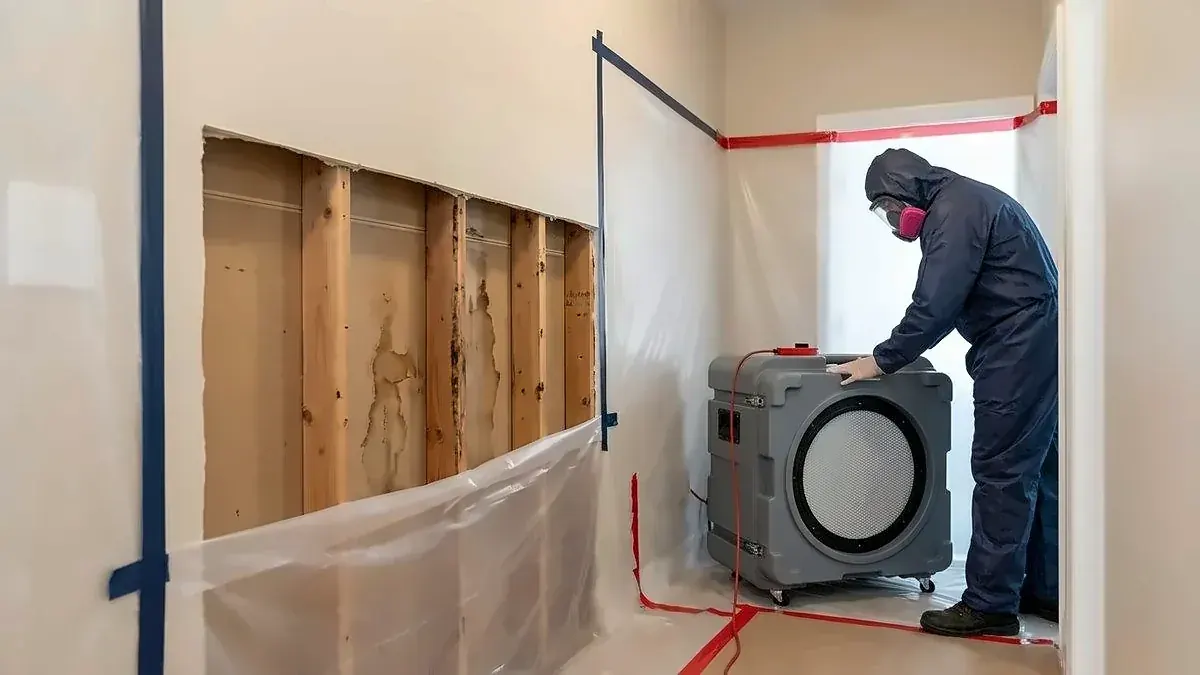
Illustration of a typical loss, not a photo of a real job.
Mold Removal and Remediation: What You Need to Know
Mold needs moisture, food and time. Wet drywall, wood and carpet in warm Texas conditions provide all three. Black mold, usually Stachybotrys, grows on materials that stay wet for several days, but color alone does not tell you what species it is. A test or an assessor can.
Remediation uses containment barriers and negative air, removes damaged porous materials, cleans surfaces with HEPA vacuums and appropriate cleaners, and dries the area. Fixing the leak is part of the job, or mold returns.
This page covers one part of our professional water damage restoration in Texas service. If you are not sure it is the right fit, the homepage explains how the whole process works from first call to final readings.
Signs You May Need This Service
- Visible spots on walls, ceilings or baseboards
- A musty odor
- Water stains that return after cleaning
- Allergy like symptoms indoors
- Peeling paint and bubbling drywall
Mistakes That Make It Worse
- Scrubbing mold with household bleach and no containment
- Painting over mold
- Disturbing growth without protective gear
- Skipping the moisture fix
What Happens, Step by Step
- Fix the moisture source
- Get an assessment if the area is large
- Set containment and negative air
- Remove materials that cannot be cleaned
- HEPA vacuum and clean surfaces
- Dry and verify before rebuild
How This Varies Across Texas
Humid East Texas, the Gulf Coast and the Valley see the most mold. Dry regions see it in basements, bathrooms, AC leaks and roof leaks. Texas licensing rules apply to assessments and remediation above a certain size, so ask the company about its license.
What Affects the Cost
Cost depends on the size of the area, the materials, the containment and the need for testing. Ask for a written plan that separates assessment from remediation.
We do not quote prices for the independent company. Read what changes the price.
Where This Service Is Requested Most
Help is available across Texas. These city guides explain the local causes and ZIP codes:
Not on the list? See all Texas service areas or check your ZIP code.
Related Services
Mold Inspection and Testing
Moisture mapping, sampling and a written plan before any removal.
Learn more →Attic and HVAC Mold Removal
Mold in attics, air handlers, ducts and the spaces around them.
Learn more →Structural Drying and Dehumidification
Air movers, dehumidifiers and moisture mapping until the building is dry.
Learn more →Mold Removal and Remediation Questions
Is Black Mold More Dangerous?
Mold of any kind can affect people with allergies and asthma. Color does not tell species.
Can I Remove Mold Myself?
Small areas, yes, with protective gear. Larger areas should be handled by licensed professionals.
Does Insurance Cover Mold?
Often only when it results from a covered water loss, and many policies cap it.
Will Mold Come Back?
It can if the moisture source is not fixed.
Who does the work: Water Damage Restoration Texas is an independent connection service and is not the contractor. The independent company that arrives sets its own pricing, licenses, insurance and terms and does the work. See our referral disclosure.
Water Damage Right Now?
Call and give your ZIP code, what happened and whether water is still flowing. We connect you with an independent local company that covers your area.
Where to Verify What You Read Here
Our guides are written for Texas conditions, and they point to public sources so you can check the basics yourself. These sites are independent of us.
- U.S. Environmental Protection Agency: Mold. Federal guidance on mold, moisture and cleanup in the home.
- CDC: Cleaning Up After a Flood. Health and safety guidance for flooded homes, including contaminated water.
- IICRC. The standards body behind the S500 water damage restoration standard.